How to work out what a machine really costs per working hour in South Africa, and when buying cash, an instalment sale, an operating lease or dry hire is cheapest. Caterpillar owning-and-operating method, SARS wear-and-tear, VAT and a worked 20 t excavator example.
A machine on your books costs money every month whether it digs or stands in the yard. A hired machine costs money only while it is on site. That one difference decides most plant decisions, and it is why the answer to "should we buy it?" is a number of hours a year, not a yes or a no.
This guide sets out how to cost a machine over its life, what each way of paying for it does to that cost, and where the break-even sits. The worked example is a new 20 t excavator at R1 850 000 excl VAT, a 2026 SANY SY215C listing. The calculator and the Excel workbook linked below run the same arithmetic on your own figures.
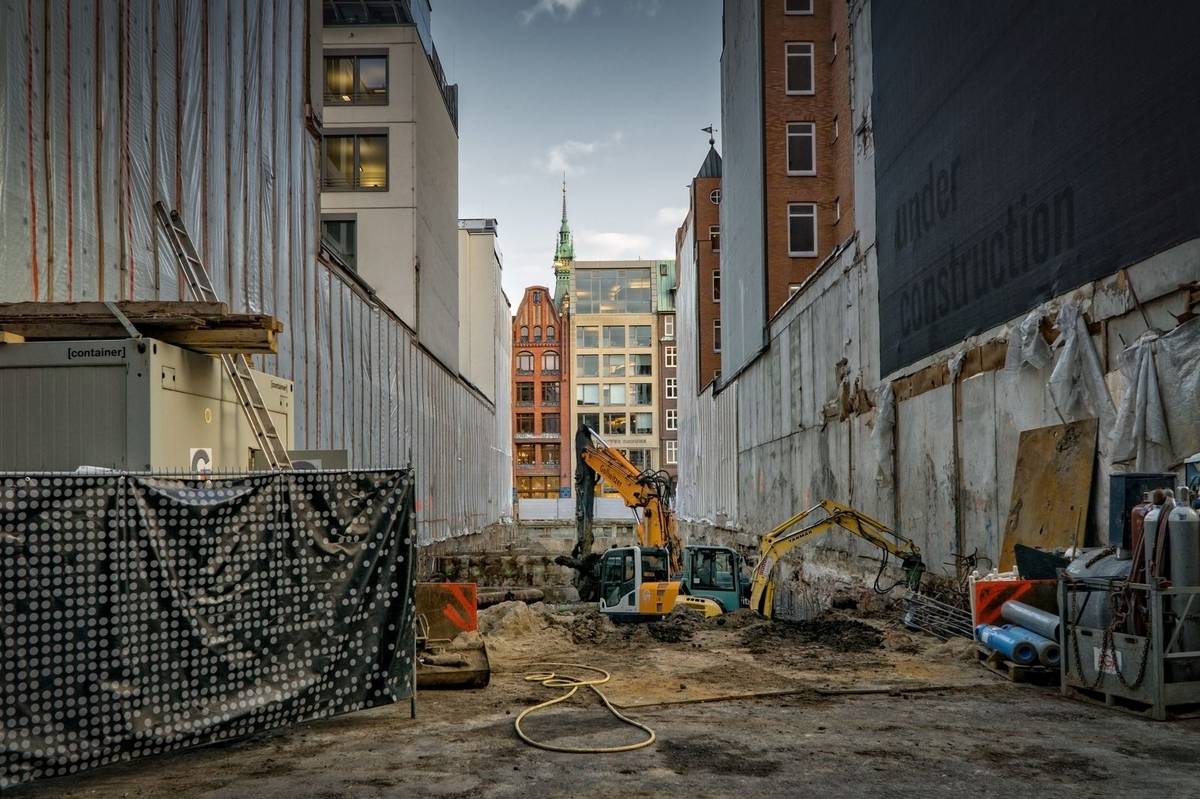
Owning cost and operating cost
Caterpillar's Performance Handbook splits the hourly cost of a machine into two parts, and the split is worth keeping. Owning cost is fixed: depreciation, interest and insurance. You carry it for every year you own the machine, so it falls per hour as utilisation rises. Operating cost is variable: fuel, maintenance and repairs, wear parts, undercarriage or tyres, and the operator. It follows the hours.
- Depreciation per hour = (delivered price − resale value) ÷ total hours owned.
- Interest and insurance are charged on the average annual investment, [P(N+1) + S(N−1)] ÷ 2N, where P is the price, S the resale value and N the years owned. Divide by hours a year.
- Fuel per hour = litres per hour × diesel price.
- Repairs are averaged over the life. Costs start low and rise in steps, and the handbook recommends an average so the early years build a reserve for the later ones.
Interest belongs in the owning cost even when you pay cash. Money tied up in a machine is money not earning elsewhere or not reducing an overdraft, so charge it at the rate you would otherwise pay. Prime has been 10.75% since 25/09/2026.
The worked example
Inputs: price R1 850 000, kept 7 years at 1 200 working hours a year (8 400 hours), resale 35% of the price (R647 500), interest 10.75%, insurance 1% of the average investment. The 7-year, 1 200-hour, 35% shape is the Caterpillar handbook's own worked example. Fuel is 13.6 L/h at R29.11 a litre, and the operator R107.86 an hour, which is the BIBC rate plus a 30% on-cost.
- Depreciation: R143.15 an hour.
- Interest on the average investment of R1 334 643: R119.56 an hour.
- Insurance: R11.12 an hour.
- Owning cost: R273.84 an hour, or R328 606 a year whether the machine works or not.
- Upkeep (maintenance, repairs, wear, undercarriage): R196.10 an hour.
- Fuel R395.90 and operator R107.86 an hour.
- Owning and operating cost: R973.69 an hour with fuel, R577.80 without.
The upkeep figure needs a warning. No South African source publishes it, so it is derived from the Caterpillar track-type tractor example, where maintenance, repairs, wear items and undercarriage come to about 10.6% of the price per 1 000 hours. That example prices workshop labour at $60 an hour, well above South African rates, so the figure is probably high here. Ask the dealer for a repair and maintenance estimate for your application. It is the second-largest line, and it decides the result.
Hire: the number to beat
Seven published South African rates for a 20 to 30 t excavator, from 2025/26 lists, run from R240 to R659 an hour with a median of R355. Most are dry rates, meaning the hire company supplies the operator and you buy the diesel. Fuel is the same whichever way you get the machine, so compare the owner's cost without fuel, R577.80, against the dry rate.
At R355 an hour, hiring is cheaper than owning this new machine at 1 200 hours a year by a wide margin. That is not a mistake in the arithmetic. Hire fleets run older machines that have already shed most of their depreciation, and they spread fixed costs across several customers. A contractor buying new is paying for the steepest part of the depreciation curve.
Break-even hours
Owning beats hire once the hours a year cover the fixed owning cost. Every hour you work saves the dry hire rate less your own upkeep and operator, so break-even = fixed owning cost a year ÷ (dry hire rate − upkeep − operator).
- At R355 an hour dry hire: 6 438 hours a year, which no single machine reaches. Hire wins.
- At R500 an hour: 1 676 hours a year.
- At R659 an hour: 926 hours a year.
- Halve the upkeep to 5.3% of price per 1 000 hours and break-even at R500 drops to 1 117 hours. At R355 it drops to 2 204 hours.
Two inputs drive the answer: the hire rate you can actually get in your region for the months you need, and your real upkeep cost. Utilisation matters too. Running more hours spreads the same R328 606 a year more thinly, but it does not move the break-even point, which is a property of the rates.
Two contractors, two answers
The same arithmetic gives very different answers depending on the size of the firm. A builder putting up one house at a time needs light plant for a few days per house. A contractor on a four-storey frame needs heavy plant for months, and cranes come with their own legal duties.
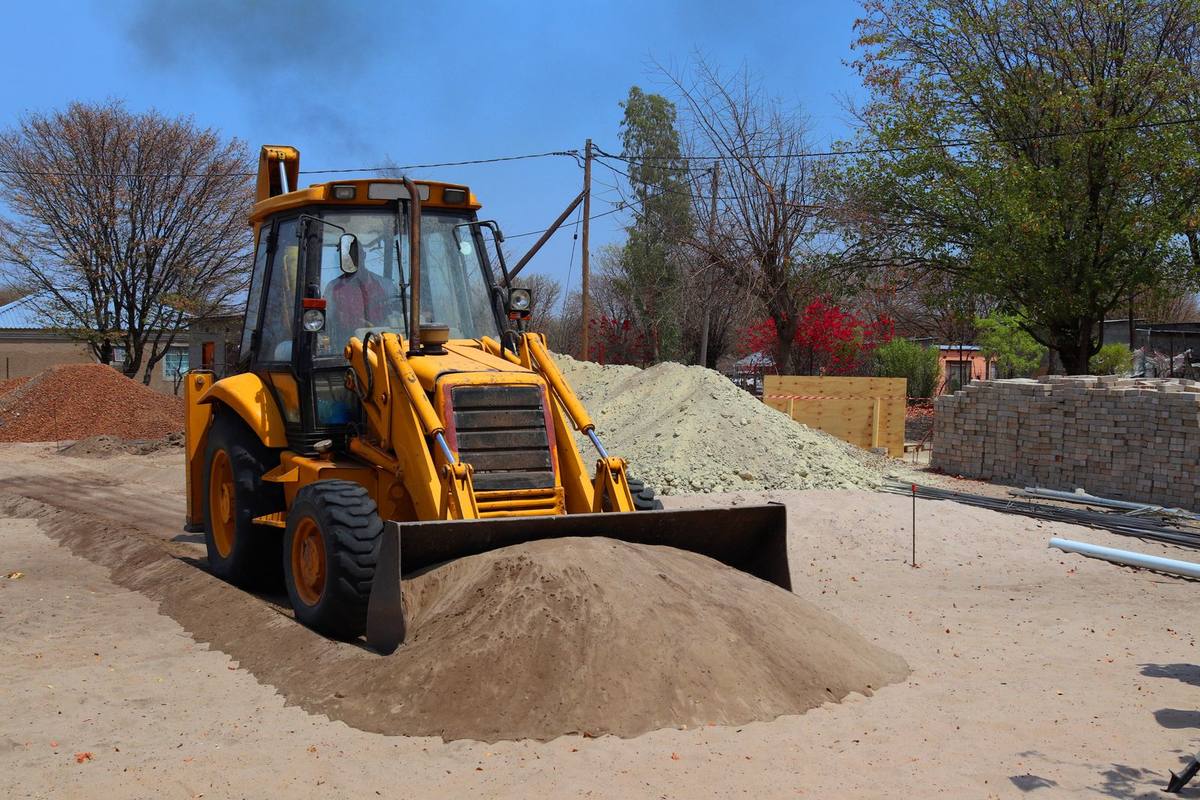
For small plant the test is simple: divide the purchase price by the day hire rate. That gives the number of hire days the price would buy. If you will use the item for more days than that over its life, owning is cheaper, before you count storage, transport, theft and repairs. The prices below are a national retailer's listed prices and Hire-It's Cape Town list from 1 May 2025, excl VAT.
| Item | Buy new | Hire a day (excl VAT) | Hire days the price buys | Verdict for a starter builder |
|---|---|---|---|---|
| Concrete mixer, 350 L | R21 950 | R305 | 72 | Own once you build more than two or three houses a year |
| Plate compactor, 120 kg | R16 495 | R260 | 63 | Own if you also do paving and driveways; otherwise hire |
| Rammer | R24 950 | R415 | 60 | Hire: trench backfill is a few days per house |
| Poker vibrator (drive unit) | R5 995 | R165 | 36 | Own: cheap, and needed on every slab |
| Steel trestle | not found | R33 | - | Own a set; hire extra for a big job |
| TLB, 90 hp class | R869 950 to R995 000 + VAT new; R585 000 for a 2014 JCB 3CX | R7 500 to R9 500 dry, R11 000 to R14 000 wet (2026 rate card) | about 100 dry days | Hire with an operator for the dig and backfill |
Two warnings sit under that table. A retailer's price may include VAT; if it does, each figure drops by about an eighth. And a machine you own still needs moving, storing and servicing, which hire avoids. The pattern holds anyway: tools used on every house pay for themselves within a year or two, while the TLB does not come close for a builder doing a handful of houses.
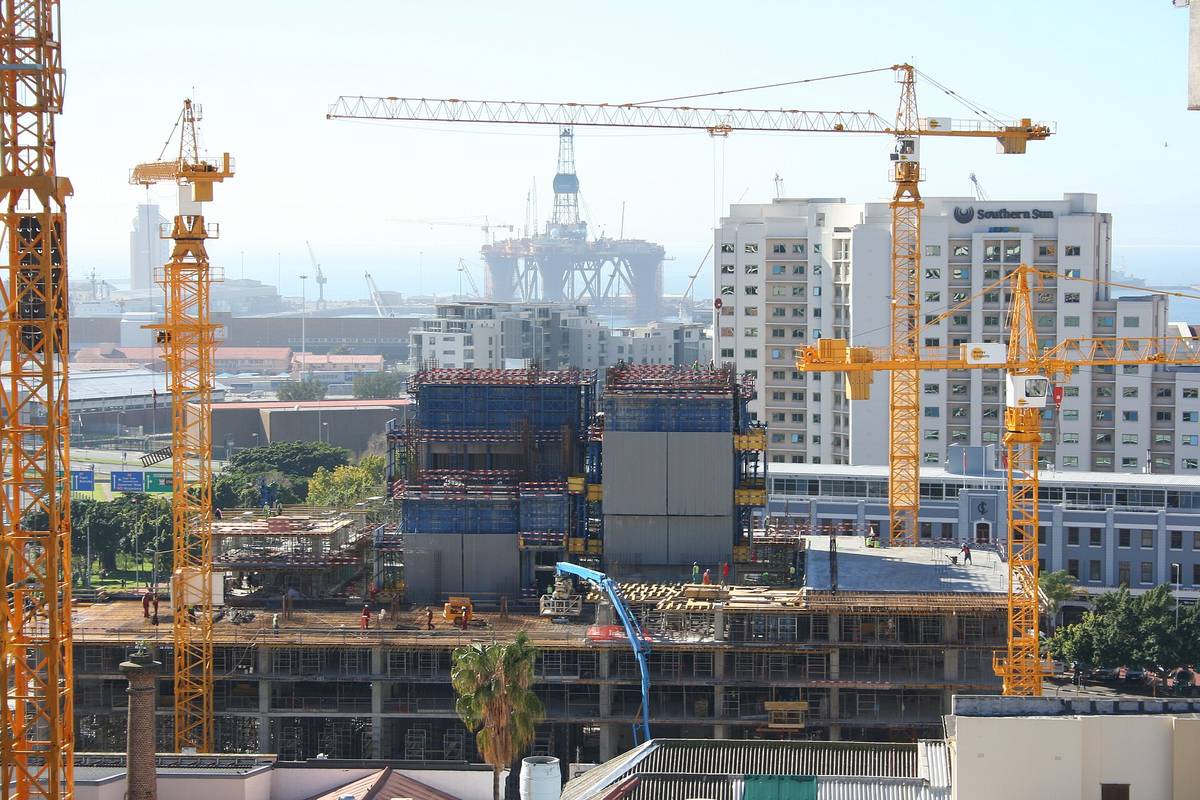
On a bigger job the question shifts from tools to fleet. Take a used 30 t Liebherr mobile crane listed at R1 800 000 + VAT. Kept 5 years with a 35% resale value at prime, its fixed owning cost is about R390 500 a year (depreciation R234 000, interest R143 190, insurance R13 320). That equals 78 days of hire at R5 000 a day with an operator. But the hire rate includes the operator, maintenance and the statutory inspections. If those cost you half the hire rate, owning breaks even at about 156 working days a year.
| Plant | Hire rate found | Buy (if listed) | Usual answer |
|---|---|---|---|
| Mobile crane, 25 to 30 t | R4 275 a day (25 t, dated list); R5 000 to R25 000+ a day with operator by size (Cape Town) | R1 800 000 + VAT, used Liebherr LTM1030 | Hire, unless you lift on most days of the year |
| Tower crane | R15 000 to R50 000 a month (2024 prices, one Cape Town supplier); erection and dismantling extra | No rand listing found | Rent for the frame period, with erection, operator and inspections in the quote |
| Telehandler, 9 m | R2 945 a day (dated list) | - | Hire per contract |
| Excavator, 20 t | R355 an hour dry (median) | R1 850 000 + VAT new | Own only above the break-even hours in this guide |
| Tipper, 10 m³ | R950 to R1 200 an hour wet | R1 095 950 new; R885 000 for a 2019 UD Quon | Own if you haul every week; otherwise hire |
Cranes add duties that do not fall away when you hire. Under regulation 18 of the Driven Machinery Regulations, 2015, a lifting machine must be tested by an inspector from a registered lifting machinery entity before first use, after every re-erection and at least every 12 months. Ropes, hooks, brakes and safety devices must be checked by a competent person at least every six months, and the user keeps a register on site, with the lessor's records for hired machines. Each operator needs training for that type of machine, and for the listed types a certificate from a Transport SETA-accredited provider. An owner carries all of that in-house. A good hire company sends it with the crane.
Paying for it: cash, instalment sale or lease
How you pay changes when the money leaves, and what tax you save along the way. It does not change what the machine costs to run. The workbook puts each option on the same footing: after tax, discounted at the after-tax cost of borrowing (10.75% × (1 − 27%) = 7.85%), and turned back into a cost per working hour.
- Cash: R703 an hour after tax in today's money. You claim wear-and-tear, and you lose the use of R1.85 million on day one.
- Instalment sale, 15% deposit, 60 months at prime: R696 an hour. The instalment is R33 994 a month. Interest is deductible and wear-and-tear is still yours, so after tax it lands within about 1% of cash.
- Operating lease: R711 an hour, using a rental estimated from the same rate with the lessor keeping the resale value. A real lessor adds a margin, so get a quote.
- Dry hire at R355 an hour plus your own diesel: R548 an hour.
The finance choice is usually worth a few rand an hour. The own-or-hire choice is worth a few hundred. Settle that first, and leave the finance structure for after.
The tax rules that apply
- Wear-and-tear (s11(e) of the Income Tax Act) is claimed on the cash cost excluding finance charges, straight-line or diminishing balance. SARS periods (Binding General Ruling 7) are 4 years for excavators, front-end loaders, graders, tractors and compressors, and 3 years for bulldozers and heavy-duty trucks. Apportion it in the year you bring the machine into use.
- A buyer under an instalment credit agreement claims the allowance as if they owned the machine, even though the financier keeps ownership until the last payment.
- Interest on the finance is deductible as it accrues (s24J). Lease rentals and hire charges are deductible under s11(a).
- When you sell, the allowances you claimed come back into income as a recoupment, up to the selling price (s8(4)(a)). Budget for the tax in the year of sale.
- The accelerated s12C allowance is for plant used in manufacturing or a similar process. It does not cover a contractor's earthmoving fleet.
- Company tax is 27%. A small business corporation can elect 50/30/20 on s11(e) assets instead (s12E(1A)).
VAT, and the National Credit Act
Under an instalment sale, the supply happens on delivery at the full cash value, so a VAT vendor claims all the input VAT upfront on the first return (VAT Act s9(3)(c), s10(6) and s16(3)). On a rental, VAT is claimed invoice by invoice. That is a cash-flow difference, not a cost one, but on R1.85 million it is R277 500 back in the first month. If you are not a VAT vendor, add 15% to every figure in this guide.
The National Credit Act does not apply where the borrowing company's asset value or annual turnover is R1 million or more (s4(1)(a)). Below that threshold it still does not apply to a large agreement of R250 000 or more (GN 713 of 2006), which covers almost any machine. In practice, plant finance for a contractor is outside the Act, so the protections of consumer credit law do not apply. Read the finance agreement accordingly.
Questions to ask before you sign
- How many hours did this type of machine actually bill in each of the last 24 months, not how many it could have?
- What will the dealer commit to for maintenance and repairs, in writing, for your application?
- What dry hire rate can you get locally, for how many months, and is a machine available when you need it?
- What is the finance rate against prime, and what are the initiation and monthly fees? Absa, for example, lists both without amounts.
- What is the machine worth after N years? Check used listings of the same model and age, not the brochure.
- Is the work long enough to keep the machine busy past the break-even, or is it one contract?
If the honest answer to the first question is below the break-even, hire. If it is well above it and the work is secure, buy, and then choose the cheapest way to pay. Every default in the calculator and the workbook shows its source and date. The orange ones are where the evidence is thin, so replace them with your own quotes before you decide.
Use it
Sources
- Caterpillar Performance Handbook, edition 49, section 25 (owning and operating costs) · link
- SARS Binding General Ruling 7 (Issue 4) and Interpretation Note 47 (Issue 5), 09/02/2021 · link
- Income Tax Act 58 of 1962, s8(4)(a), s11(a), s11(e), s12C, s24J; VAT Act 89 of 1991, s1, s9(3), s10(6), s16(3) (consolidations on acts.co.za)
- National Credit Act 34 of 2005, s4(1) and GN 713 of 2006 thresholds
- SARB, Monetary Policy Committee statement, September 2026; prime 10.75% (current market rates, 19/10/2026) · link
- SARS company income tax rate 27% · link
- Excavator prices: Truck & Trailer listings seen 19/10/2026 (SANY SY215C 2026 R1 850 000 + VAT; Komatsu PC200 2022, 1 140 h, R1 650 000 + VAT)
- Dry hire rates 2025/26: Winton plant rates, MACP price list, Siyashesha plant rates; Absa business instalment sale (24 to 72 months)
- Hire-It price list effective 01/05/2025 · link
- Adendorff Machinery Mart: MAC AFRIC 350 L mixer, HS-120 plate compactor, TRE75 rammer, vibrator drive unit (product pages, 19/10/2026) · link
- TLB hire rates South Africa, 2026 rate card (06/07/2026) · link
- Crane hire: Plant Index (plantindex.co.za/product/crane-hire-25-ton/), Brightrig Cape Town (brightrig.co.za/crane-hire-cape-town.html), Cape Rigging Services (caperiggingservices.co.za/crane-hire-cape-town-prices/)
- Used cranes: Truck & Trailer cranes category, 19/10/2026 · link
- Driven Machinery Regulations, 2015 (GNR 540), regulation 18 (Occupational Health and Safety Act 85 of 1993)
By Setout. General guidance, not project-specific advice.
Reviewed by Aidan Koetaan MBA PMP, quantity surveyor and construction project manager.
The Setout list
More guides like this, by email
Occasional email when we publish a new guide or tool. No spam, unsubscribe anytime.